
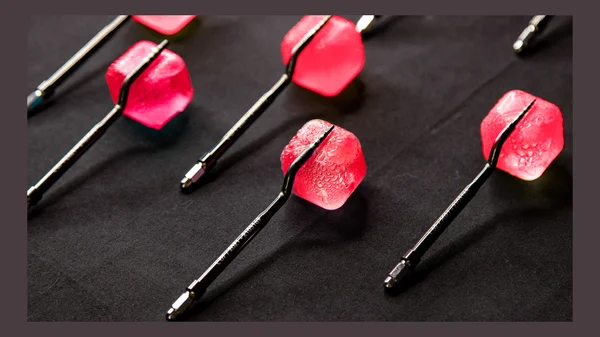
 Black Ruby DLC-coated instruments for osteotomy and bone-condensation protocols. Discover more →
 OSSEOTOUCH · Magnetic Mallet System
First Lancet Osteotome
One osteotome, no pilot drill
Lancet Osteotome by Prof. Domenico Baldi · Ø 1.8 mm · 4-faced tip · alternative to the rotary pilot drill
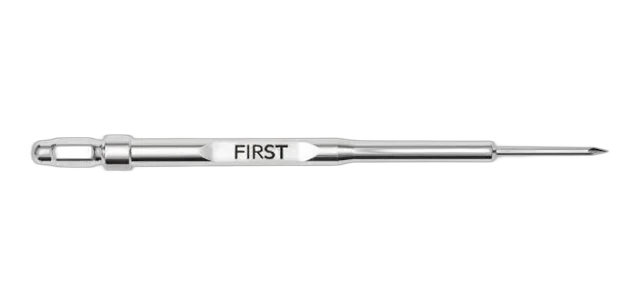
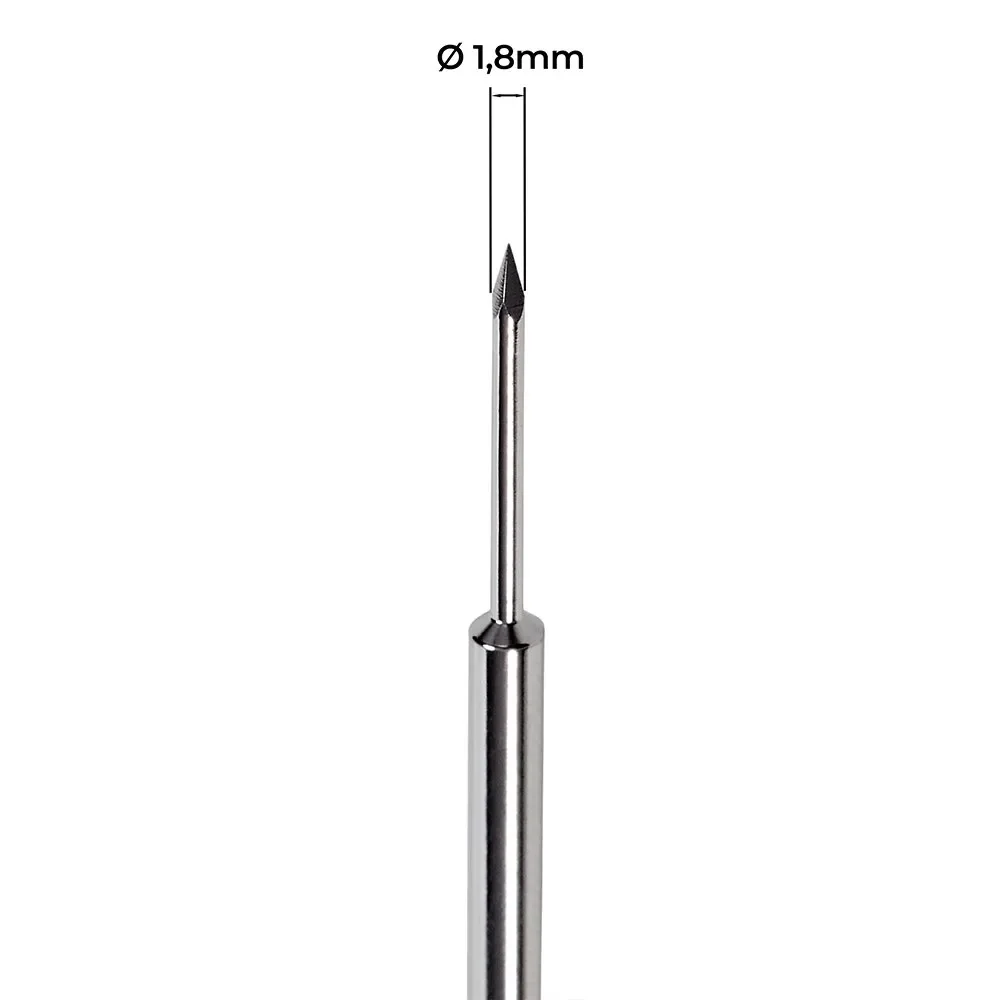
A lancet osteotome designed by Prof. Domenico Baldi for use with MAGNETODYNAMICS as an alternative to the rotary pilot drill. The 4-faced sharp tip (Ø 1.8 mm) penetrates the cortical plate through lateral expansion and bone condensation — non-rotary, rotary bur-free, no routine irrigation required during preparation. Particularly relevant for thin-ridge implant placement, post-extractive socket axis correction, and flapless implant placement workflows.
Pilot drill alternative·Lancet osteotome·Ø 1.8 mm 4-faced tip·Rotary bur-free·Flapless implant placement·Thin ridge·Post-extractive·Prof. Baldi·Pilot drill alternative
01 The clinical problem
The pilot drill subtracts bone
where you can't afford to lose it
The conventional implant protocol begins with the pilot drill — a rotating instrument that removes bone to create the initial osteotomy. Removing bone weakens the implant site, generates frictional heat, and requires continuous irrigation. On thin ridges, the drill can skid on the cortical plate, axis control is compromised, and a millimeter error reshapes the entire implant trajectory. In post-extractive sockets, the irregular geometry of the residual walls makes axis determination with a rotary drill even harder.
02 The First approach
A lancet osteotome
that condenses, doesn't drill
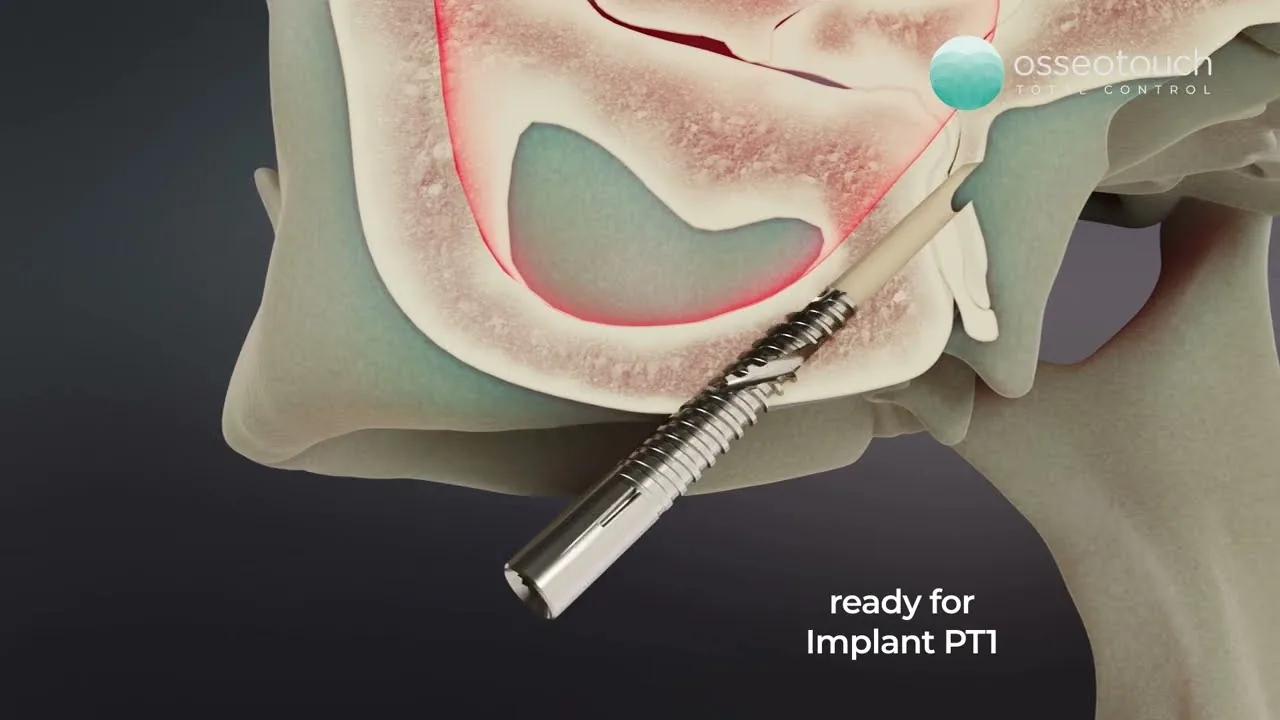
First is a lancet osteotome with a 4-faced sharp tip (Ø 1.8 mm) designed by Prof. Domenico Baldi. Coupled to the Magnetic Mallet, it penetrates the cortical plate through lateral expansion and bone condensation — non-rotary, rotary bur-free, no routine irrigation required during preparation. The 4 sharp faces engage the cortical without skidding, even on knife-edge ridges. In post-extractive sockets, First redefines the socket axis before implant osteotomy.
02 First in action
Watch it at work
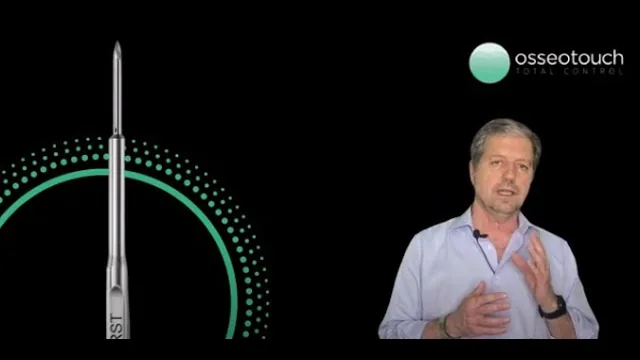
animation + designer's explanation
Two videos to understand the lancet osteotome — usage walkthrough and the designer's clinical rationale.
03 Six benefits
Six benefits
of cortical entry using MAGNETODYNAMICS
One instrument. Six reasons the first step of the implant protocol becomes more bone-preserving and more axis-controlled than rotary pilot drilling.
Pilot-drill-free workflow
Eliminates the rotary pilot drill from the implant protocol. The lancet tip penetrates the cortical plate without removal — only expansion and condensation.
Axis control on thin ridges
4 sharp faces engage the cortical without skidding. Stays on the planned axis even on knife-edge ridges where rotary drills tend to deflect.
Bone condensation
Compacts cortical bone during penetration instead of removing it. Higher peri-implant bone density commonly supports primary stability.
Avoids rotary friction heat
Non-rotary advancement avoids the rotary friction heat conventional pilot drilling generates. No routine irrigation required during this phase.
Axis correction in real-time
If the trajectory needs adjustment during the preparation, the same instrument can redirect — no additional drill changes required.
Single-instrument addition
Adds to any Magnetic Mallet kit or purchased standalone. No additional handpiece required — works with the new-generation Magnetic Mallet you already have.
Bring the lancet osteotome
to your implant protocol
Talk with our specialist to evaluate First for your implant workflow, check compatibility with your existing Magnetic Mallet handpiece, or request a demonstration.
We are in Italy. We reply within one business day, usually before 12pm ET.
04 Technical specifications
One instrument
one purpose
First is a single lancet osteotome designed for use with MAGNETODYNAMICS. Compatible with the Magnetic Mallet handpiece you already use.
Specifications
| Spec | Value |
|---|---|
| Designer | Prof. Domenico Baldi (University of Genoa) |
| Tip shape | Lancet — 4 sharp faces |
| Diameter | Ø 1.8 mm |
| Material | Surgical-grade stainless steel |
| Sterilization | Autoclavable, standard protocols |
| Compatibility | New-generation Magnetic Mallet handpieces (all kits) |
| Purchase options | Standalone or add-on to any Magnetic Mallet kit |
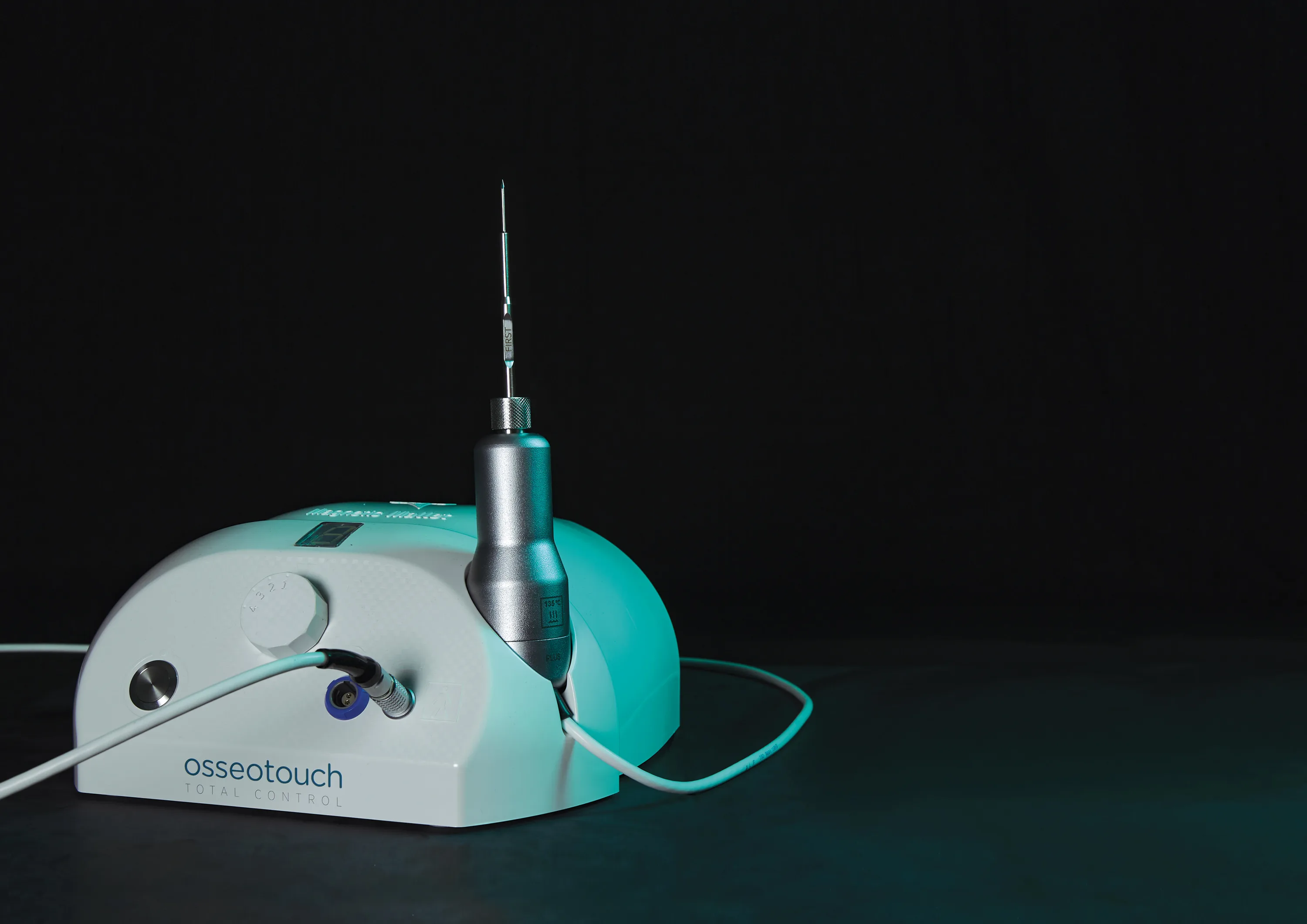
Working principle: the Magnetic Mallet handpiece delivers 50-microsecond impulses to the lancet tip. The 4 sharp faces engage the cortical plate without skidding; the bone is laterally expanded and compacted rather than rotated and removed. No routine irrigation required during the preparation phase.
U.S. orders · available now
Order First through OSSEOTOUCH LLC — fast nationwide delivery, dedicated clinical support.
05 Clinical applications
Four clinical applications
one cortical entry workflow
First covers the implant scenarios where rotary pilot drilling is most likely to compromise axis control, primary stability, or workflow simplicity.
Thin / knife-edge ridges
The 4-faced lancet tip engages the cortical plate without skidding, where conventional pilot drills tend to lose axis control. Atraumatic cortical penetration with controlled lateral expansion.
Post-extractive immediate implant
Redefines the axis of the residual extraction socket before implant osteotomy. Corrects the geometric irregularities of the socket walls that make axis determination with a rotary drill difficult.
Flapless implant placement
Replaces the rotary pilot drill in flapless mini-invasive workflows where soft-tissue management constrains irrigation and visibility. Non-rotary advancement avoids rotary friction heat at the cortical entry.
Dense cortical bone access
Penetrates well-mineralized cortical without rotary friction heat. Supports an approach that aims to preserve cortical bone integrity at the implant entry point.
U.S. orders · ships nationwide
Add First to your implant protocol — order through OSSEOTOUCH LLC, fast nationwide delivery.
06 Frequently asked questions
Common questions
about First
What is First and what is it used for?
First is a lancet osteotome designed by Prof. Domenico Baldi for use with MAGNETODYNAMICS as an alternative to the rotary pilot drill in implant site preparation. The 4-faced sharp tip (Ø 1.8 mm) penetrates the cortical plate through lateral expansion and bone condensation — non-rotary, rotary bur-free, no routine irrigation required during the preparation phase. Particularly suited to thin ridges, post-extractive sockets, and flapless implant placement workflows.
Do I need the Magnetic Mallet to use First?
Yes. First is designed for the OSSEOTOUCH Magnetic Mallet handpiece. It connects to the handpiece like any other instrument in the range. If you already own a Magnetic Mallet, First can be added as a standalone instrument or to any existing kit.
How is First different from a conventional pilot drill?
A conventional pilot drill rotates and removes bone to create the initial osteotomy. First does not rotate and is designed to preserve bone by lateral expansion and condensation rather than rotary removal. The result: no rotary friction heat during preparation, no routine irrigation required, denser bone at the cortical entry, and better axis control on thin or irregular ridges.
Can First be used on very thin ridges?
Yes — this is one of the primary indications. The 4-faced lancet tip does not skid even on knife-edge ridges, allowing the surgeon to maintain the planned axis where conventional rotary pilot drills tend to deflect.
Can First be used in post-extractive sockets?
Yes — particularly indicated for this scenario. First redefines the axis of the residual extraction socket before implant osteotomy, correcting the geometric irregularities that make axis determination with a rotary pilot drill difficult.
Is First a good fit for flapless implant placement?
Yes. Flapless workflows constrain soft-tissue management and irrigation access at the cortical entry point. First's non-rotary advancement avoids the rotary friction heat that conventional pilot drilling generates — a recognized concern in flapless protocols where irrigation cooling is most constrained.
Can First be added to an existing Magnetic Mallet kit?
Yes. First can be added to any Magnetic Mallet kit or purchased as a standalone instrument. No additional handpiece required — works with the new-generation Magnetic Mallet you already have.
What is the FDA regulatory status of the Magnetic Mallet system?
The OSSEOTOUCH Magnetic Mallet is registered with the U.S. FDA under Establishment Registration 3011922183 and product codes EIS · KDG · GEY (21 CFR 872.4565 / 878.4820). U.S. Agent: Thema USA, New York. The First osteotome threads onto new-generation Magnetic Mallet handpieces and is fully autoclavable.
U.S. orders · ships nationwide
Bring cortical entry using MAGNETODYNAMICS to your protocol — order First through OSSEOTOUCH LLC, fast nationwide delivery and dedicated clinical support.
Ready to get started?
Talk with our team — we'll help you evaluate First for your implant workflow and run a demonstration at your office or via video call.
Book a clinical call
Pick a date and time. We will contact you to discuss your workflow.
Email our specialists
cs@osseotouch.com
Direct chat with our team.
U.S. ordersBuy online
Order First through OSSEOTOUCH LLC — fast nationwide delivery.
First is part of the OSSEOTOUCH Magnetic Mallet system, manufactured by Meta Ergonomica S.r.l. (Italy). United States: registered with the U.S. FDA under Establishment Registration 3011922183 and product codes EIS · KDG · GEY (21 CFR 872.4565 / 878.4820). U.S. Agent: Thema USA, New York. ISO 13485. Use restricted to qualified dental professionals according to the instructions for use.
OSSEOTOUCH PEER-TO-PEER
See what your peers are doing with Magnetodynamics
Discover how they use it in clinical practice, what advantages they observe and connect directly with them.
75+ resources