
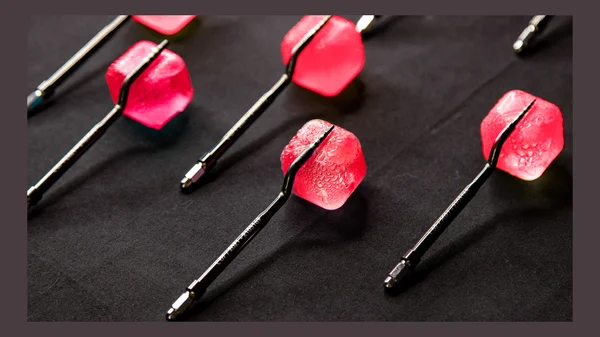
 Black Ruby DLC-coated instruments for osteotomy and bone-condensation protocols. Discover more →
 OSSEOTOUCH · Magnetic Mallet System
Kit Osteotomi Silver
Bone-preserving site preparation · osteotomes designed for use with MAGNETODYNAMICS
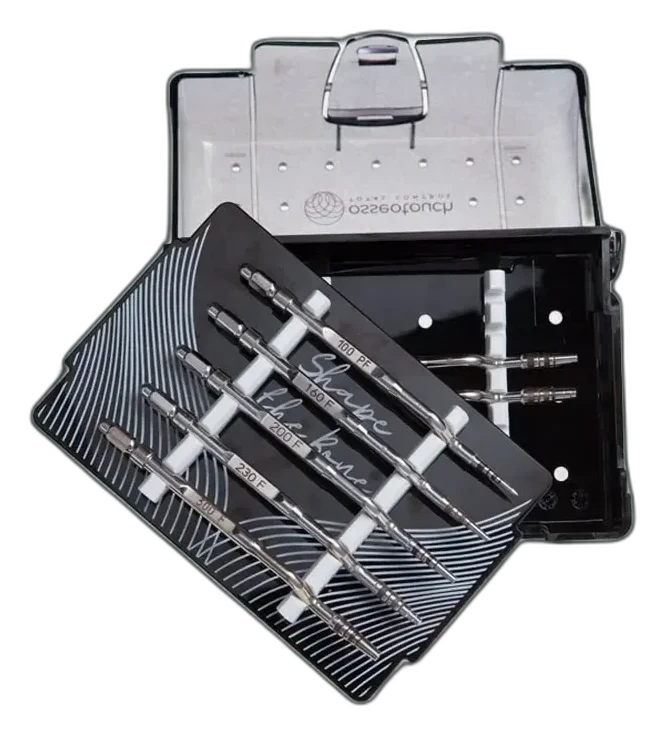
Six-osteotome kit · 100-P · 160 · 200 · 230 · 330 · 360 · marked depth notches 7.0–15.0 mm
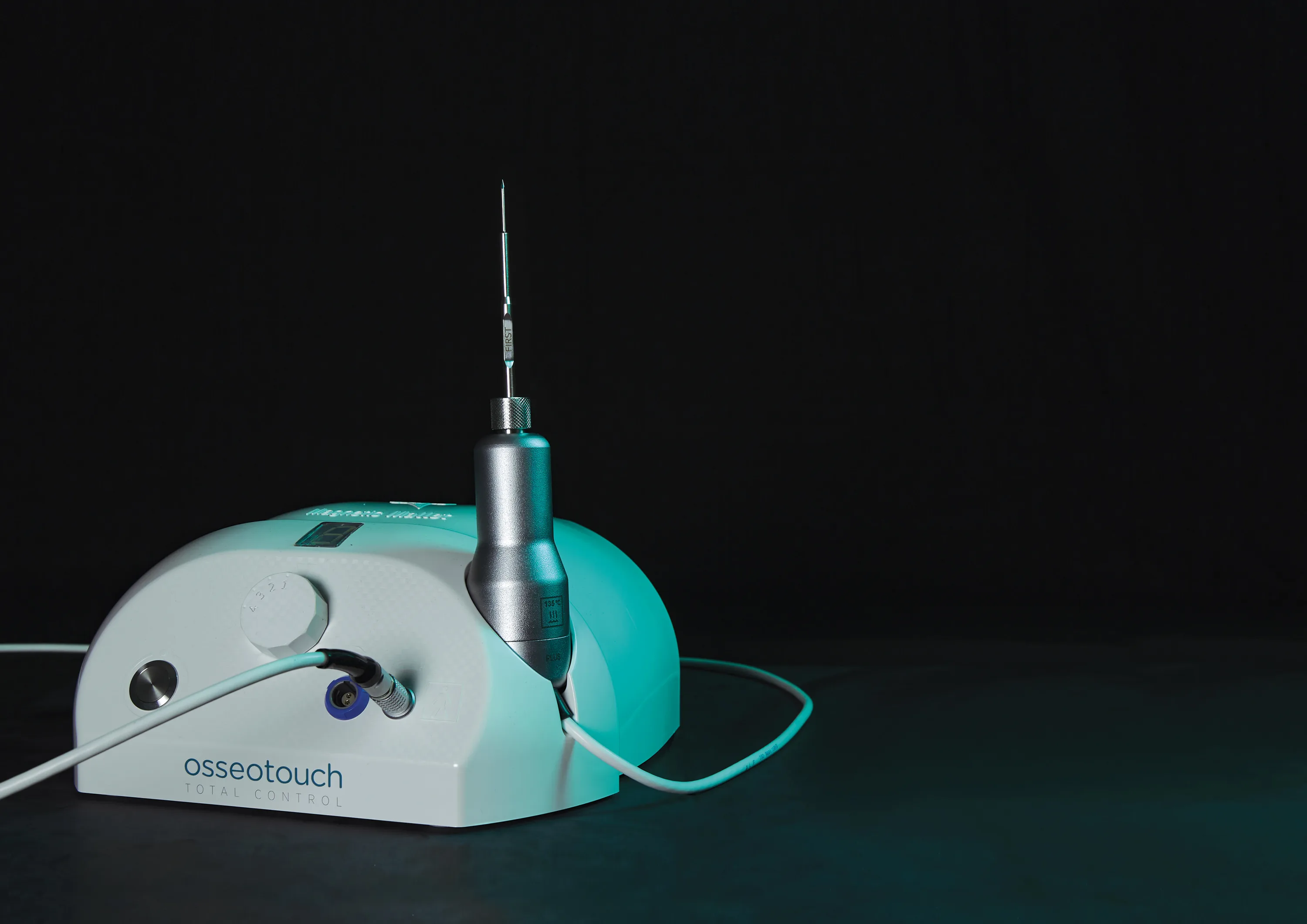
Six curved-handle osteotomes designed for use with MAGNETODYNAMICS for implant site preparation. The kit applies osseodensification — lateral bone condensation along the planned trajectory — without rotary burs. Each osteotome advances by short axial impulses delivered through the OSSEOTOUCH Magnetic Mallet handpiece, preserving cancellous bone matrix and supporting peri-implant density.
Osseodensification·bone condensation using MAGNETODYNAMICS·Non-rotary site preparation·Crestal sinus lift·LMSF·Curved-handle osteotomes·Depth-marked osteotomes·Bone-preserving preparation·Osseodensification
01 The clinical problem
Rotary preparation
subtracts what you want to keep
Conventional implant site preparation removes bone with rotary burs. The cancellous matrix that supports primary stability is excavated, frictional heat is generated at the bone–bur interface, and irrigation is required to manage thermal risk. In atrophic ridges and sinus floor proximity, every micron of removed bone is bone you cannot put back.
02 The Silver kit approach
Six osteotomes
that condense, don't drill
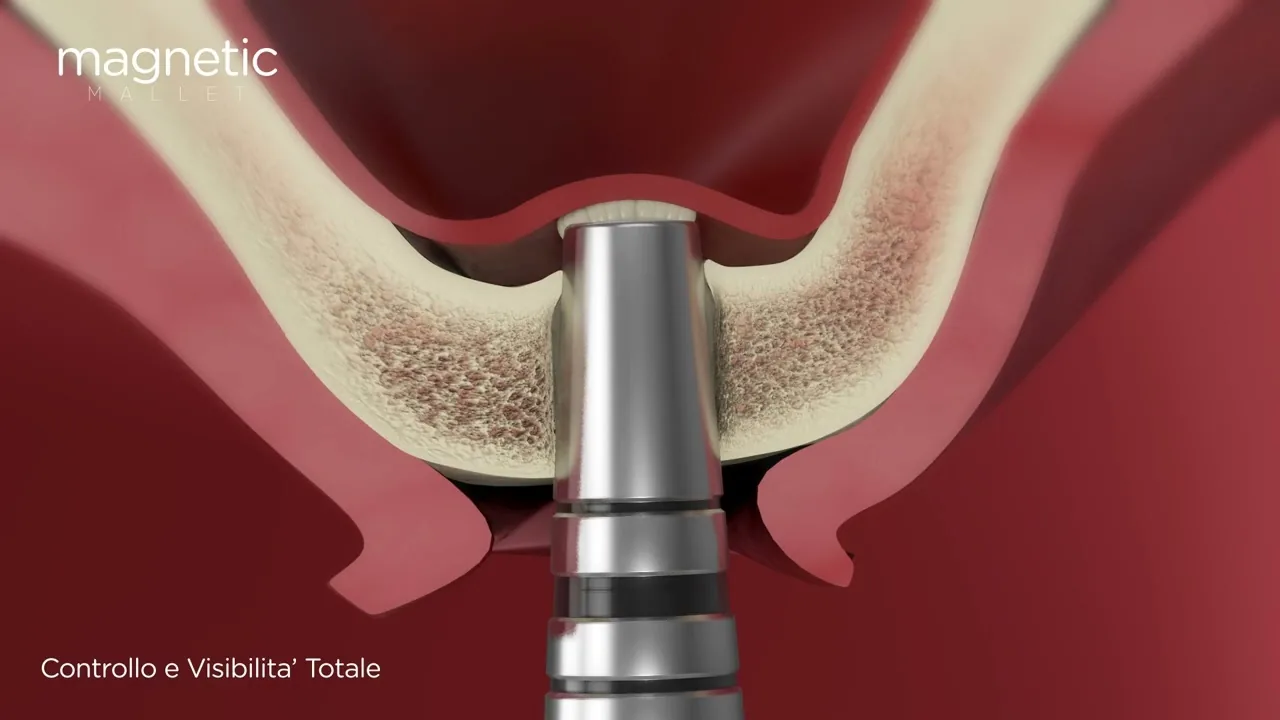
Kit Osteotomi Silver applies osseodensification through non-rotary osteotomes designed for use with MAGNETODYNAMICS. Six progressive diameters (100-P, 160, 200, 230, 330, 360) advance through the cancellous bone by lateral compaction — preserving the bone matrix and avoiding the rotary friction heat of conventional drilling. Compatible with crestal sinus lift (LMSF) when condensing toward the sinus floor.
02 Silver kit at work
Watch the kit
at work
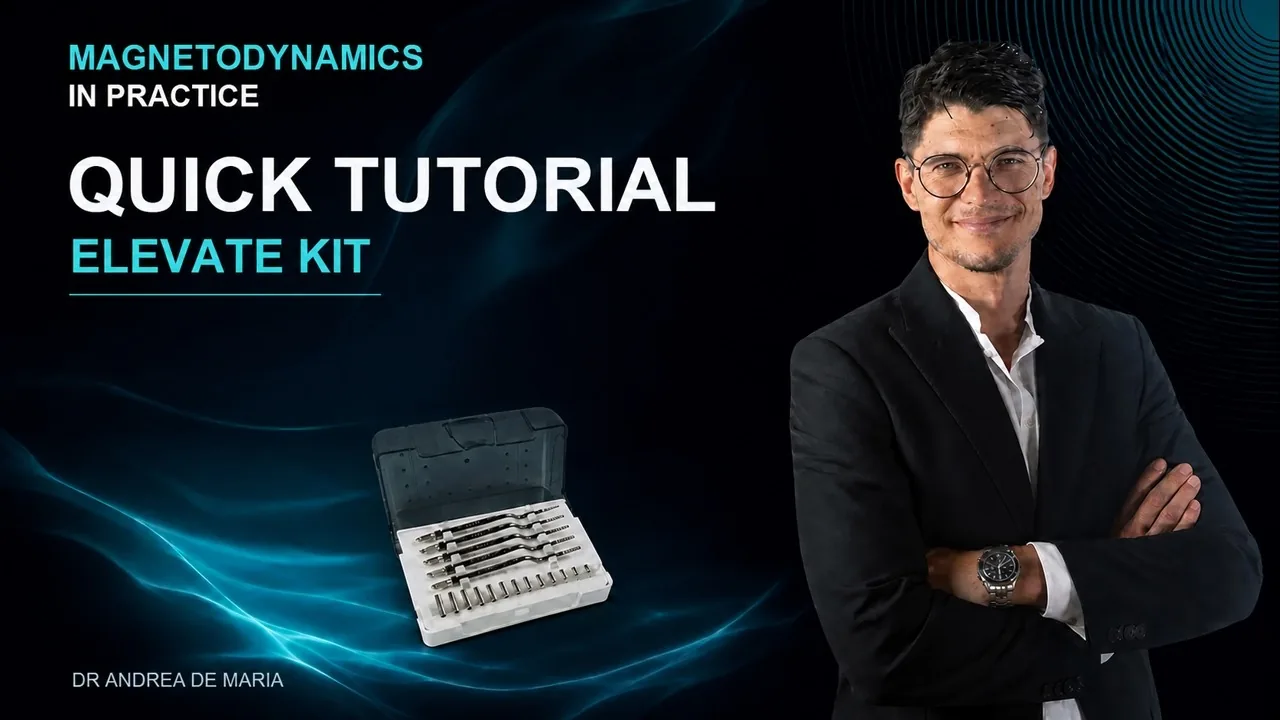
Demonstration video of the Kit Osteotomi Silver — osseodensification using MAGNETODYNAMICS with the curved-handle osteotomes.
03 Six benefits
Six benefits
of osseodensification using MAGNETODYNAMICS
One handpiece. One six-osteotome kit. Six reasons site preparation becomes more bone-preserving than rotary protocols.
Osseodensification, not subtraction
Cancellous bone is laterally condensed instead of excavated. Bone matrix preserved, peri-implant density supported.
Six progressive diameters
100-P → 360 in calibrated steps. Apical Ø 1.0–3.6 mm, coronal Ø 3.1–5.5 mm. Full implant osteotomy range in one kit.
Avoids rotary friction heat
Axial impulse generated using MAGNETODYNAMICS — no rotating cutting flute against bone, so no rotary friction heat in the osteotome phase.
Marked depth notches on every osteotome
Marked at 7.0, 8.5, 10.0, 11.5, 13.0, 15.0 mm. Depth read during preparation, not after.
Curved offset handle
Anterior and posterior access without the bulk of straight osteotomes. Handpiece clearance preserved in posterior maxilla and mandible.
Crestal sinus lift compatible
Apical osteotomes (100-P, 160, 200) can condense bone toward the sinus floor for crestal sinus elevation / LMSF technique.
Bring osseodensification using MAGNETODYNAMICS
to your practice
Talk with our specialist to evaluate Kit Osteotomi Silver, check compatibility with your existing Magnetic Mallet handpiece, or request a demonstration.
We are in Italy. We reply within one business day, usually before 12pm ET.
04 The kit · 6 osteotomes + RADEL case
One kit
for site preparation and crestal sinus lift
Six progressive-diameter osteotomes designed for use with MAGNETODYNAMICS — single instrument or full kit, your choice. Each osteotome can be reordered individually.
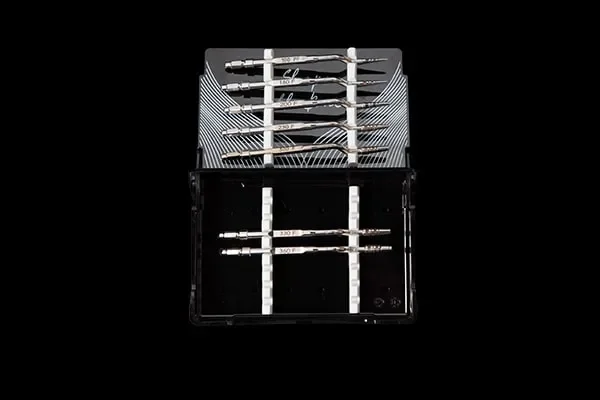
Six progressive-diameter osteotomes
| Code | Apical Ø | Coronal Ø | Phase |
|---|---|---|---|
| 100-P | 1.0 mm | 3.1 mm | Initial pilot / sinus floor approach |
| 160 | 1.6 mm | 3.7 mm | First progressive expansion |
| 200 | 2.0 mm | 3.9 mm | Mid-diameter / narrow implant |
| 230 | 2.3 mm | 4.5 mm | Final expansion (narrow-platform) |
| 330 | 3.3 mm | 5.0 mm | Wide-platform preparation |
| 360 | 3.6 mm | 5.5 mm | Maximum expansion |
Marked depth notches
Every osteotome carries marked depth notches at 7.0, 8.5, 10.0, 11.5, 13.0, 15.0 mm — depth read during preparation, not after.
Curved offset handle · individually reorderable
Curved offset geometry preserves handpiece clearance in posterior maxilla and mandible. Each osteotome can be ordered individually as a replacement or to build a custom subset.
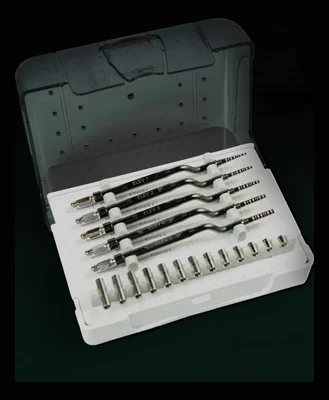
Optional case: RADEL autoclavable surgical case organizes up to 12 osteotomes. Reusable surgical components and case autoclavable per manufacturer's IFU. Compatible with new-generation Magnetic Mallet handpieces (osteotomes thread via standard threaded coupling, 4 power levels on the console).
U.S. orders · available now
Order Kit Osteotomi Silver through OSSEOTOUCH LLC — fast nationwide delivery, dedicated clinical support.
05 Clinical applications
Three clinical applications
one Silver kit
Kit Osteotomi Silver covers the implant site preparation scenarios where rotary subtraction is most likely to compromise primary stability or peri-implant density.
Implant site preparation
Osseodensification of the implant osteotomy with progressive diameters — from initial pilot through the final implant diameter. Bone matrix preserved, peri-implant density supported.
Crestal sinus lift
Apical osteotomes condense bone toward the sinus floor for crestal sinus elevation. No rotation against the cancellous-cortical interface; Schneiderian membrane integrity verified by clinical/radiographic assessment.
LMSF technique
Localised Management of Sinus Floor — minimally invasive crestal management of the sinus floor. The progressive-diameter sequence supports controlled axial advancement with bone matrix preservation.
U.S. orders · ships nationwide
Bring osseodensification using MAGNETODYNAMICS to your practice — order through OSSEOTOUCH LLC, fast nationwide delivery and dedicated clinical support.
06 Frequently asked questions
Common questions
about Kit Osteotomi Silver
What is Kit Osteotomi Silver and what is it used for?
A six-osteotome kit for non-rotary osseodensification using MAGNETODYNAMICS and the OSSEOTOUCH Magnetic Mallet. The osteotomes (100-P, 160, 200, 230, 330, 360) advance through cancellous bone by lateral condensation rather than rotary subtraction. Indicated for implant site preparation and crestal sinus lift (LMSF).
How is this different from Densah / Versah burs?
Both pursue osseodensification (lateral condensation rather than excavation), but the technical principle differs: Densah / Versah burs are rotary instruments operated in reverse cutting mode by an electric motor. Kit Osteotomi Silver uses non-rotary osteotomes designed for use with MAGNETODYNAMICS advanced by short axial impulses through the Magnetic Mallet handpiece — no rotation, no rotary friction heat in the osteotome phase.
What osteotomes are included?
Six osteotomes: 100-P (Apical 1.0 / Coronal 3.1 mm), 160 (1.6 / 3.7), 200 (2.0 / 3.9), 230 (2.3 / 4.5), 330 (3.3 / 5.0), 360 (3.6 / 5.5). All carry marked depth notches at 7.0, 8.5, 10.0, 11.5, 13.0, 15.0 mm.
Can I use Kit Osteotomi Silver for crestal sinus lift?
Yes. Apical osteotomes (100-P, 160, 200) can condense bone toward the sinus floor for crestal sinus elevation and LMSF (Localised Management of Sinus Floor) technique. The decision to perform a crestal sinus lift is always based on CBCT planning and clinical judgment of available bone height and Schneiderian membrane integrity.
Does it generate heat?
The osteotome phase using MAGNETODYNAMICS avoids rotary friction heat — there is no spinning cutting edge against bone during the osteotome sequence. When rotary drills are used (e.g. for the cortical entry step), standard irrigation practices apply.
Does Kit Osteotomi Silver replace conventional drills?
Not entirely. Silver replaces the cancellous preparation phase with non-rotary condensation using MAGNETODYNAMICS. Cortical entry on dense D1 bone is still typically performed with a rotary pilot bur, when clinically indicated, before switching to the osteotome sequence.
Are the osteotomes individually reorderable?
Yes. Every instrument can be ordered individually as a replacement or to build a custom subset. An optional RADEL autoclavable case is available to organize up to 12 osteotomes.
Is Kit Osteotomi Silver autoclavable?
Yes. The reusable surgical osteotomes and the RADEL surgical case are autoclavable according to the manufacturer's IFU. Compatible with new-generation Magnetic Mallet handpieces via the standard threaded coupling.
Is there published evidence on Magnetic Mallet site preparation?
Yes. Schierano et al., "Biomolecular, Histological, Clinical, and Radiological Analyses of Dental Implant Bone Sites Prepared Using Magnetic Mallet Technology: A Pilot Study in Animals", Materials, 2021 — Università di Torino / Università di Genova. This is a pilot animal study on dental implant bone sites prepared using MAGNETODYNAMICS with the Magnetic Mallet, not a clinical study on the Kit Silver specifically.
What is the FDA regulatory status of the Magnetic Mallet system?
The OSSEOTOUCH Magnetic Mallet is registered with the U.S. FDA under Establishment Registration 3011922183 and product codes EIS · KDG · GEY (21 CFR 872.4565 / 878.4820). U.S. Agent: Thema USA, New York.
Ready to get started?
Talk with our team — we'll help you evaluate Kit Osteotomi Silver for your implant site preparation workflow and run a demonstration at your office or via video call.
Book a clinical call
Pick a date and time. We will contact you to discuss your workflow.
Email our specialists
cs@osseotouch.com
Direct chat with our team.
U.S. ordersRequest U.S. proposal
OSSEOTOUCH LLC — fast nationwide delivery.
Kit Osteotomi Silver is part of the OSSEOTOUCH Magnetic Mallet system, manufactured by Meta Ergonomica S.r.l. (Italy). United States: registered with the U.S. FDA under Establishment Registration 3011922183 and product codes EIS · KDG · GEY (21 CFR 872.4565 / 878.4820). U.S. Agent: Thema USA, New York. ISO 13485. Use restricted to qualified dental professionals according to the instructions for use.
OSSEOTOUCH PEER-TO-PEER
See what your peers are doing with Magnetodynamics
Discover how they use it in clinical practice, what advantages they observe and connect directly with them.
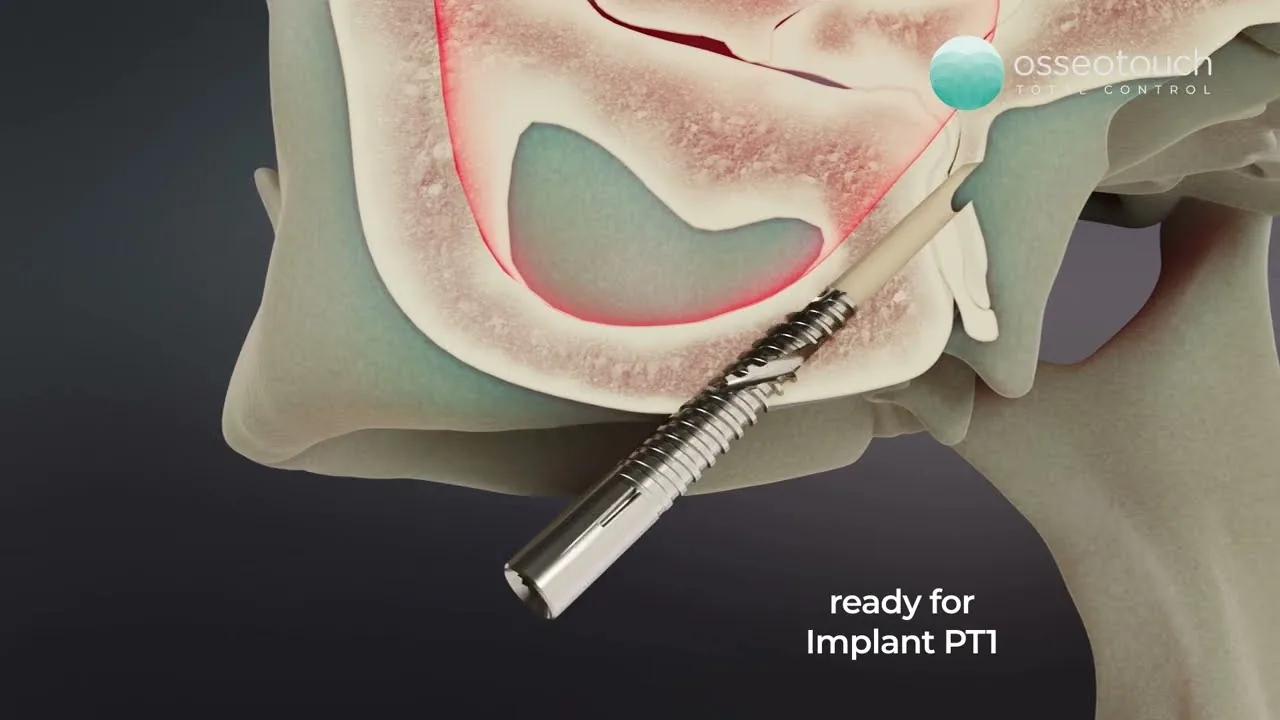
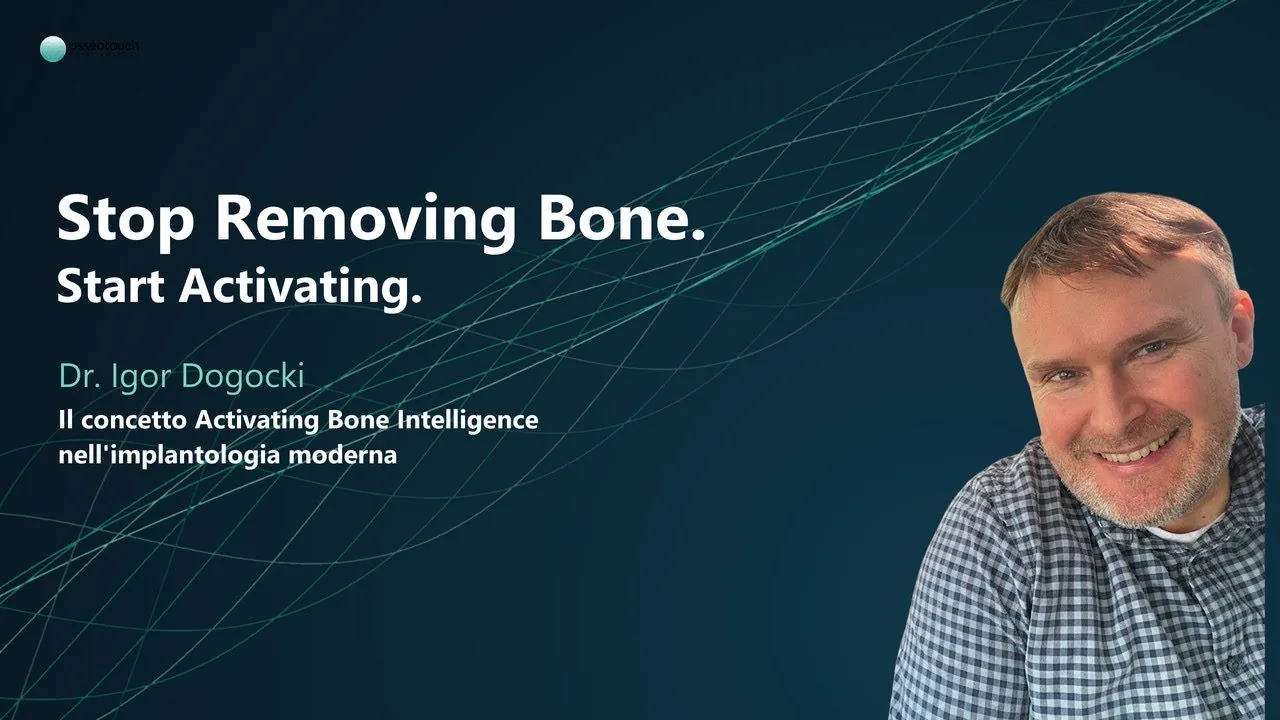
75+ resources