
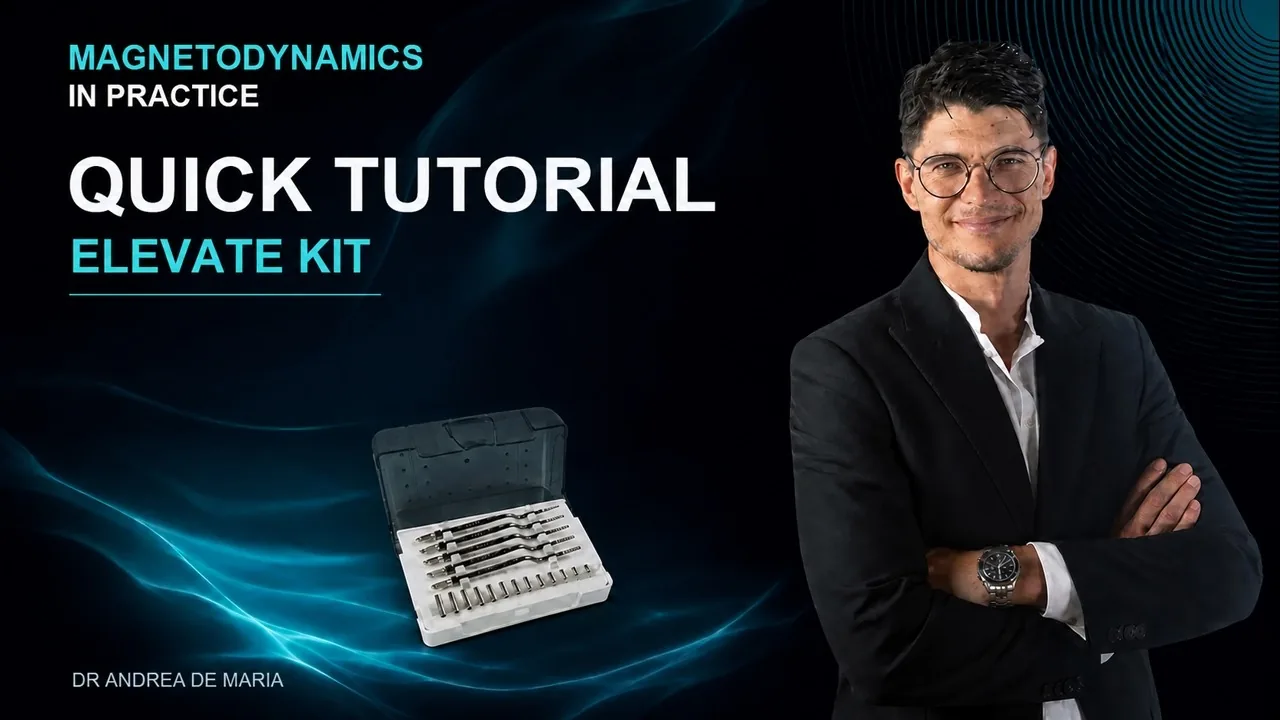
 Elevate A dedicated Magnetic Mallet protocol for crestal sinus floor elevation. Discover more →
 OSSEOTOUCH · Magnetic Mallet System
Ridge Expansion Kit
Horizontal ridge expansion without sacrificing bone
ridge expansion using MAGNETODYNAMICS · 3 configurations · GENOA blades by Prof. Domenico Baldi
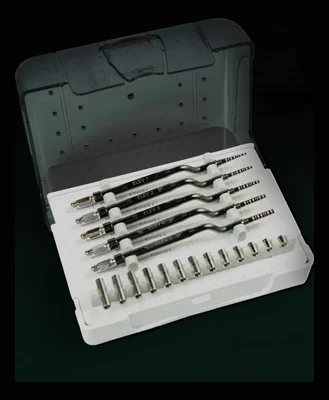
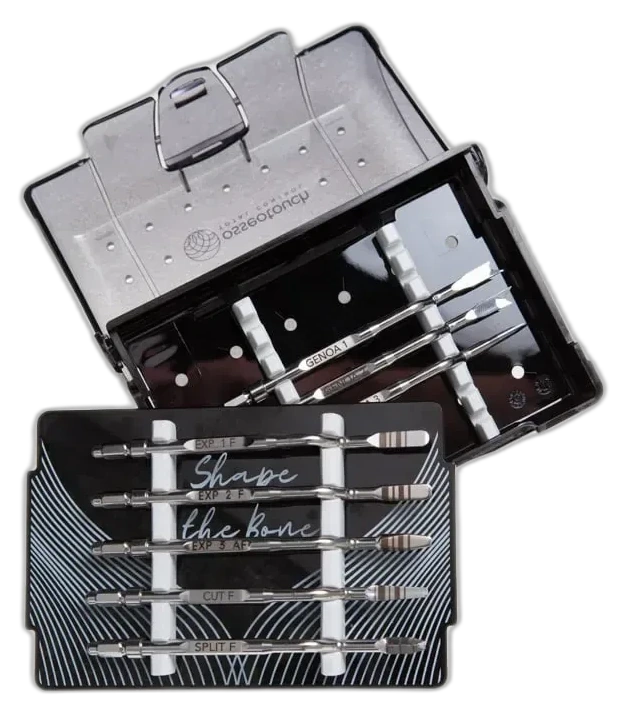
Three configurations — Expander 5, GENOA 3, and Expander Plus 8 — for progressive horizontal expansion of the alveolar ridge with the Magnetic Mallet. Cortical plates are laterally distracted rather than cut, with no rotary heat in the expansion phase and a dry surgical field. Documented in two peer-reviewed clinical studies (Crespi 2014, 2021) and a 2025 Minerva case series.
Ridge expansion·Split crest·Bone preservation·MAGNETODYNAMICS·GENOA blades·Prof. Baldi·3 configurations·5-year evidence·Ridge expansion·Split crest
01 The clinical problem
Traditional techniques
fight the narrow ridge
Narrow alveolar ridges with thin cortical bone are a daily challenge in implant practice — and every millimeter of remaining bone counts. Conventional approaches (rotary burs, piezoelectric cutting, manual chisels) share one limitation: they remove bone exactly where bone is most scarce. Manual osteotomes depend on operator force and produce variable percussion energy from one patient to the next.
02 The Ridge Expansion Kit approach
MAGNETODYNAMICS
progressive expansion
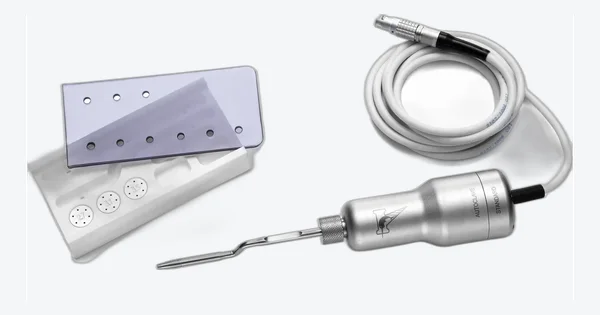
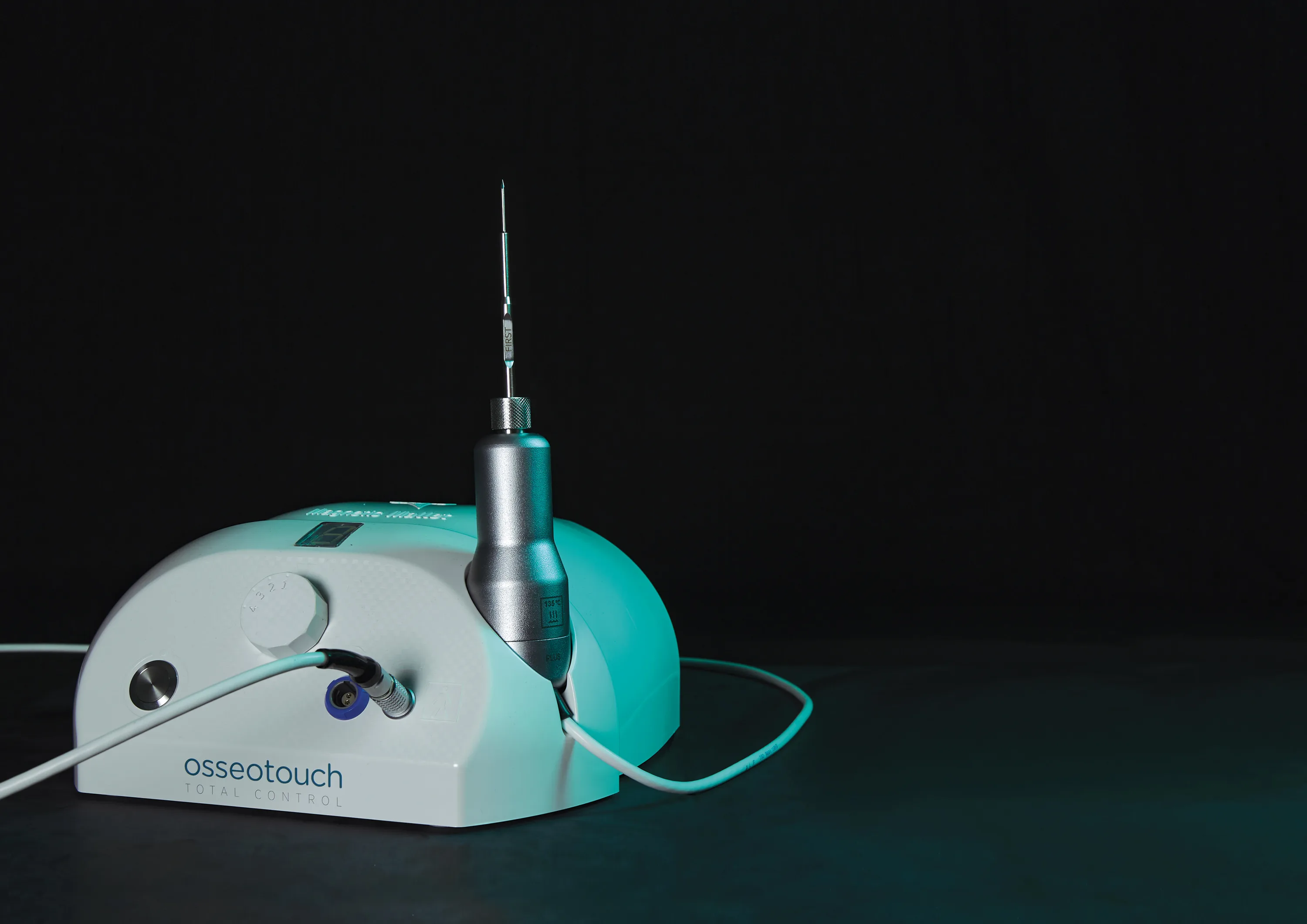
The Magnetic Mallet delivers a calibrated 50-microsecond impulse — enough force to expand the ridge, brief enough to limit energy transfer to surrounding tissue. Progressively wider instruments distract the cortical plates without removing bone, with continuous tactile feedback. No rotary heat, no routine irrigation in the expansion phase, dry field throughout.
02 Six benefits
Six benefits
of ridge expansion using MAGNETODYNAMICS
One handpiece. Three configurations. Six reasons ridge expansion becomes more predictable, less invasive, and bone-preserving in every horizontal expansion case.
Bone preservation
Progressive expansion without removing bone. In narrow ridges every millimeter counts — the Ridge Expansion Kit doesn't subtract tissue, it laterally distracts the cortical plates.
Calibrated, operator-independent force
Force is delivered by the device, not the surgeon's wrist. Reproducible impulse, independent of manual skill (Crespi 2014).
Dry surgical field
No routine irrigation in the expansion phase. Optimal visibility from first impulse to final width.
Controlled access with GENOA
Three GENOA blades by Prof. Domenico Baldi create the initial entry on thin cortical ridges with controlled cortical separation.
Integrated with implant prep
From ridge expansion to implant osteotomy with instruments designed for use with MAGNETODYNAMICS — same handpiece, same principle, coherent workflow.
Lower post-op discomfort
Crespi (2014) reported lower post-operative discomfort in patients treated with Magnetic Mallet vs. manual split-crest techniques.
03 See the technique
Watch it at work
animation + designer's explanation
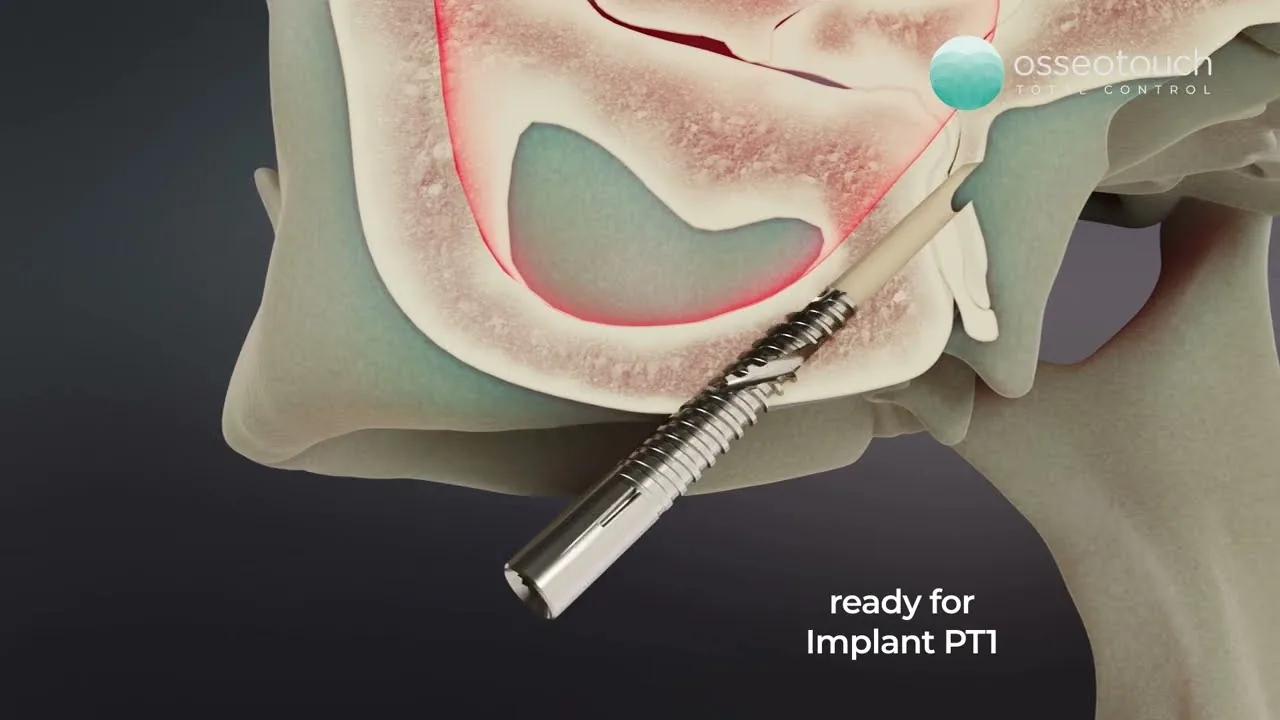
Two videos to understand the ridge expansion using MAGNETODYNAMICS: a 3D animation of the technique and Prof. Domenico Baldi explaining the GENOA blade design.

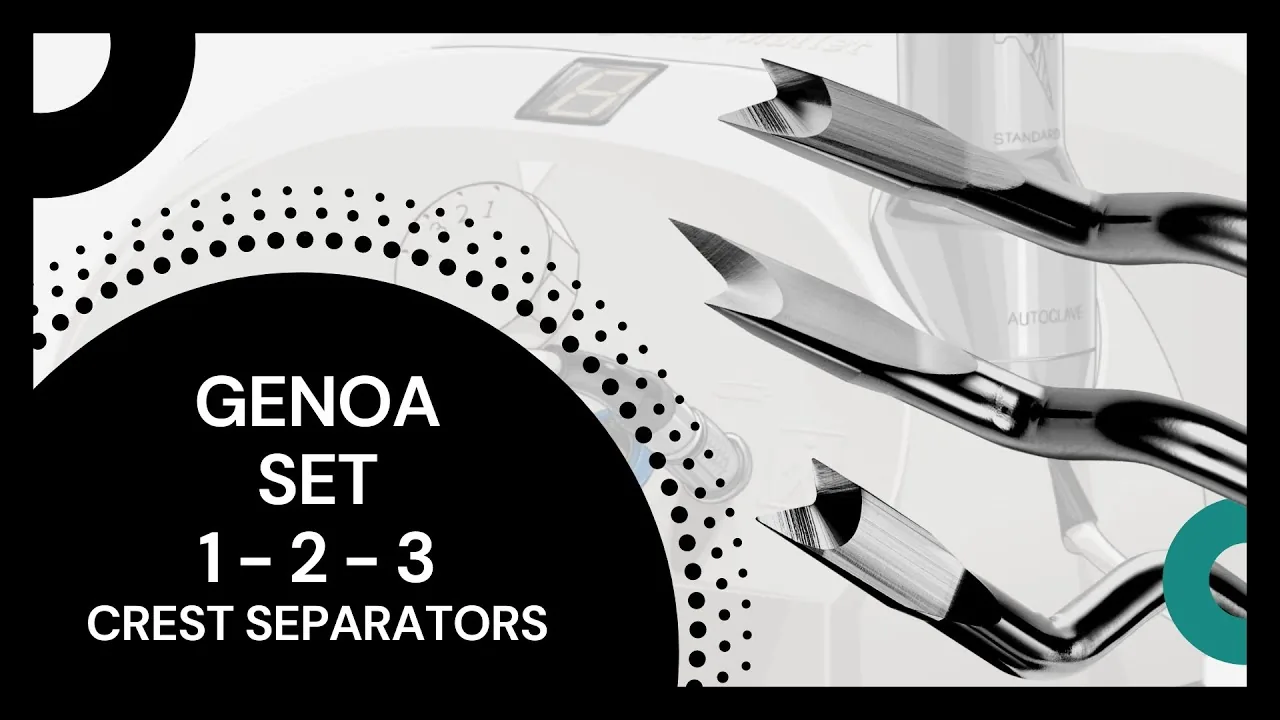
Bring ridge expansion using MAGNETODYNAMICS
to your practice
Talk with our specialist to evaluate the Ridge Expansion Kit configuration that fits your practice — Expander 5, GENOA 3, or the complete Expander Plus 8.
We are in Italy. We reply within one business day, usually before 12pm ET.
04 Three configurations
Three configurations
one workflow
Three kits cover every clinical scenario for horizontal ridge expansion. Pick the configuration that matches your case mix — or combine both with Expander Plus 8.
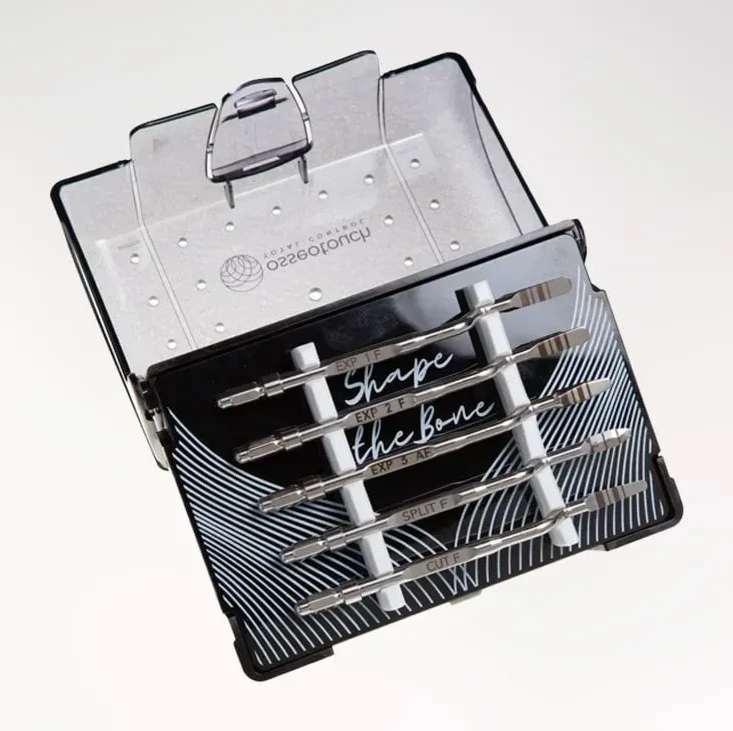
5 instruments
Expander 5
SPLIT · CUT · EXP1 · EXP2 · EXP3. Five curved instruments, progressively wider, for standard expansion of ridges with sufficient bone width. Offset handle for all sectors of the arch.
Standard expansion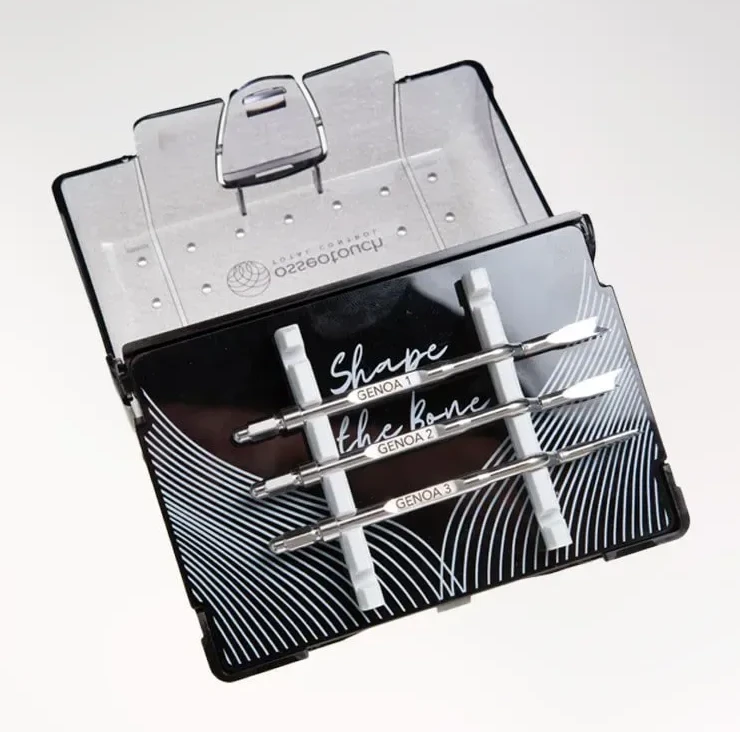
3 blades · Prof. Baldi
GENOA 3
GENOA1 · GENOA2 · GENOA3. Three blades by Prof. Domenico Baldi for controlled cortical separation in thin ridges. Vertical entry with the tip stabilizes the instrument; progressive tilting opens the cortical plates without bone subtraction.
Thin-ridge access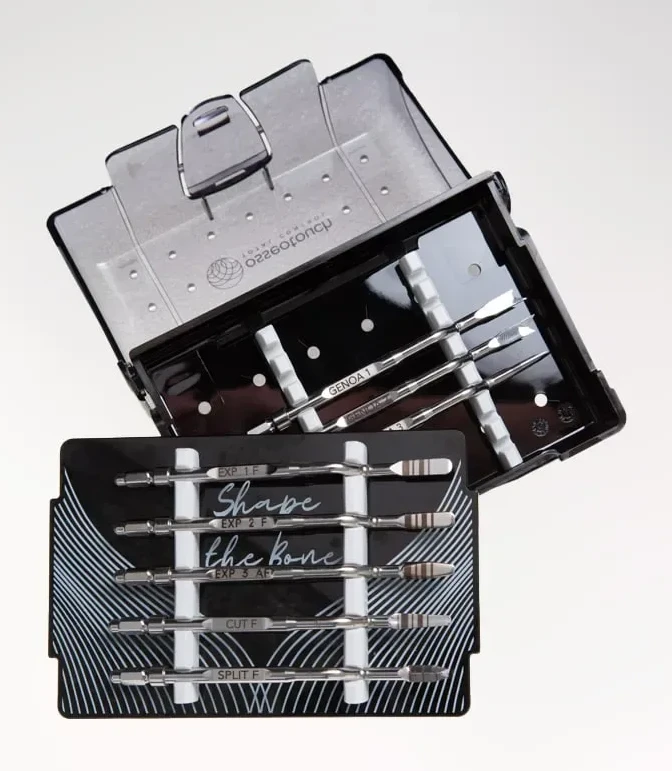
8 instruments · complete
Expander Plus 8
Expander 5 + GENOA 3 combined. Full case-mix flexibility from initial controlled access on thin ridges to final expansion on standard sites. The configuration most clinicians choose for full ridge expansion practice.
Complete coverageSurgical-grade stainless steel, fully autoclavable. Compatible with new-generation Magnetic Mallet handpieces (Plus handpiece recommended for dense cortical bone). All instruments individually re-orderable; optional radel tray available for organizing up to 12 instruments.
U.S. orders · available now
Order the Ridge Expansion Kit through OSSEOTOUCH LLC — fast nationwide delivery, dedicated clinical support.
05 Clinical applications
Four clinical applications
one ridge expansion workflow
The Ridge Expansion Kit covers the clinical scenarios where conventional cutting techniques sacrifice the bone you can't afford to lose.
Atrophic ridges with horizontal resorption
Insufficient ridge width for standard implant placement. Progressive expansion using MAGNETODYNAMICS gains horizontal space without grafting in suitable cases.
Thin ridges with intact cortical bone
GENOA blades create the initial controlled access where conventional expanders cannot start the sequence. Cortical plates separate without sacrificing bone.
Expansion + immediate implant placement
Crespi (2021) documented 5-year survival in both maxilla and mandible when implants were placed simultaneously with the split crest procedure.
Continuity to implant osteotomy
From ridge expansion to site preparation with instruments designed for use with MAGNETODYNAMICS. Same handpiece, same principle, coherent workflow throughout the surgical session.
U.S. orders · ships nationwide
Add the Ridge Expansion Kit to your implant workflow — order through OSSEOTOUCH LLC, fast nationwide delivery.
06 Clinical cases in practice
Documented clinical cases
by international clinicians
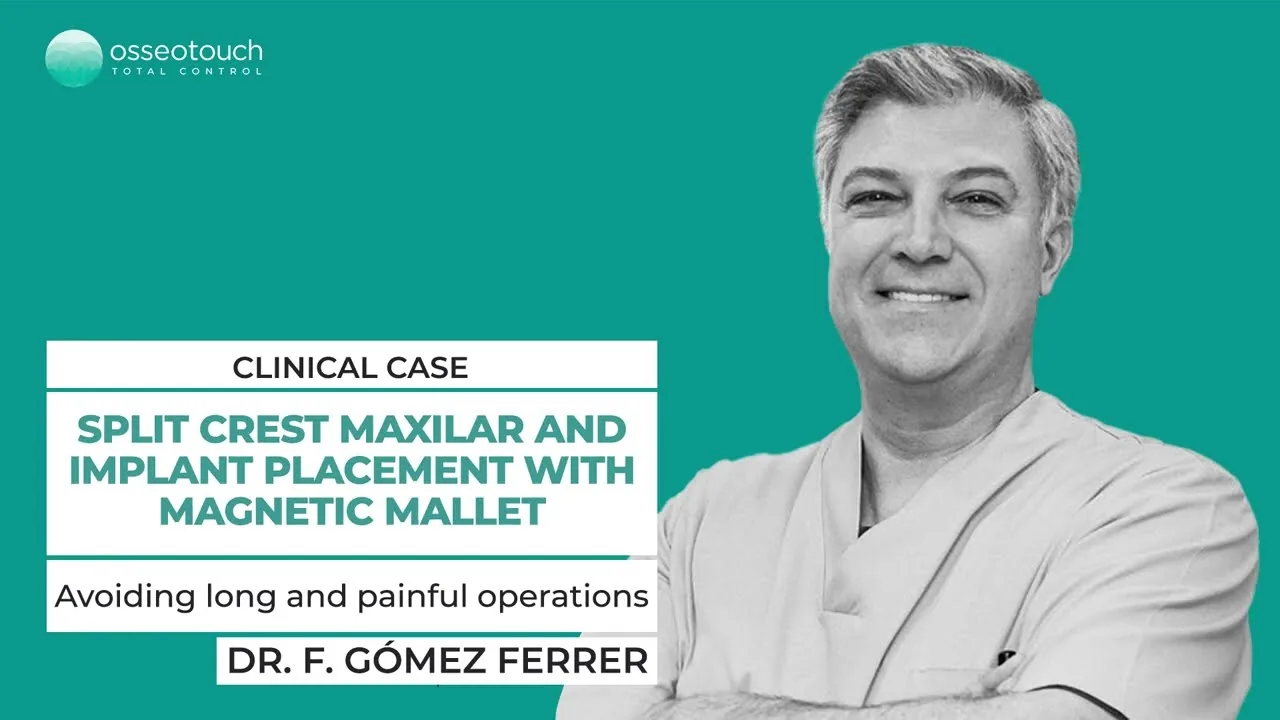
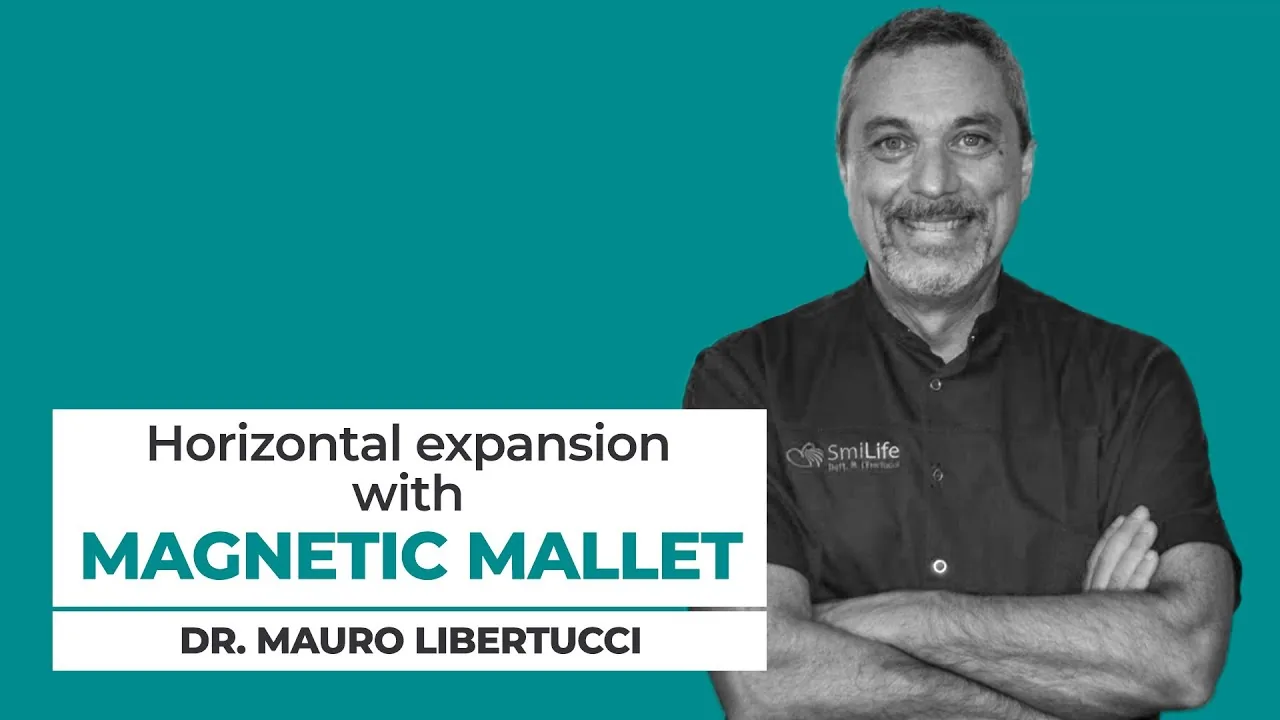
Three documented clinical cases showing the Ridge Expansion Kit at work — including a case by Dr. Roberto Crespi, principal author of the 5-year published evidence.

07 Scientific evidence
Documented in peer-reviewed clinical research
Split crest using MAGNETODYNAMICS with the Magnetic Mallet has been evaluated across 181+ implants and up to 5 years of follow-up. Documented outcomes: significant ridge width gain, high implant survival, and reduced post-operative discomfort compared with manual techniques.
+4.4 mm average ridge width gain
(maxilla, Crespi 2021)
(maxilla, Crespi 2021)
100% implant survival, mandible
5-year follow-up (Crespi 2021)
5-year follow-up (Crespi 2021)
95.5% implant survival, maxilla
5-year follow-up (Crespi 2021)
5-year follow-up (Crespi 2021)
2.8 → 7.2 mm ridge width expanded
(181 implants, Crespi 2014)
(181 implants, Crespi 2014)
Peer-reviewed sources
Retrospective · 5-year CBCT Int. J. Oral Maxillofac. Implants 2021
Maxillary and Mandibular Split Crest Technique with Immediate Implant Placement: A 5-Year Cone Beam Retrospective Study
Clinical study · 181 implants Oral Maxillofac. Surg. 2014
Electrical Mallet Provides Essential Advantages in Split-Crest and Immediate Implant Placement
Case series · DOI 10.23736/S2724-6329.25.05106-X Minerva Dent. Oral Sci. 2025
Evaluation of the crestal bone expansion obtained with the Magnetic Mallet during the preparation of the implant site
Plus a Master's thesis from the University of Genoa (Thneibat O., advisor Prof. P. Pera, co-advisor Prof. D. Baldi — designer of the GENOA blades) further evaluating crestal bone expansion with the instrument designed for use with MAGNETODYNAMICS in academic context.
08 Frequently asked questions
Common questions
about the Ridge Expansion Kit
What is the Ridge Expansion Kit and what is it used for?
An instrument system using MAGNETODYNAMICS for horizontal expansion of the alveolar ridge with the OSSEOTOUCH Magnetic Mallet. Available in three configurations — Expander 5, GENOA 3, and Expander Plus 8 — for progressive ridge expansion without bone removal in atrophic and thin-ridge implant cases. Cortical plates are laterally distracted rather than cut, avoiding rotary friction heat during the expansion phase, with a dry surgical field.
What's the difference between Expander 5, GENOA 3, and Expander Plus 8?
Expander 5 contains the five progressive expanders (SPLIT, CUT, EXP1, EXP2, EXP3) for standard expansion on ridges with sufficient bone width. GENOA 3 contains three blades by Prof. Domenico Baldi for controlled access on thin ridges with intact cortical bone, where standard expanders cannot start the sequence. Expander Plus 8 combines both kits for complete clinical coverage.
What makes GENOA different from other thin-ridge instruments?
GENOA, designed by Prof. Domenico Baldi, separates the cortical plates in a controlled manner while limiting bone sacrifice. Unlike piezoelectric cutting (which removes bone during the cut), GENOA enables progressive penetration, controlled cortical opening, and ridge expansion in a single operative sequence using MAGNETODYNAMICS.
How does Magnetic Mallet ridge expansion compare to piezoelectric techniques?
Piezoelectric instruments are designed for bone cutting and remove tissue during the split, require continuous irrigation that reduces field visibility, and provide continuous mechanical action without discrete tactile feedback. Magnetic Mallet ridge expansion is progressive without bone removal, avoids rotary friction heat during the expansion phase, runs with a dry surgical field, and provides discrete tactile feedback for assessing cortical elasticity at each step.
What clinical evidence supports split crest with Magnetic Mallet?
Three peer-reviewed sources plus an academic thesis. Crespi (2021) on 38 patients at 5-year CBCT follow-up reported +4.4 mm maxillary ridge width gain, 100% mandibular implant survival, and 95.5% maxillary implant survival. Crespi (2014) on 181 implants reported initial ridge width 2.8 ± 0.7 mm expanding to 7.2 ± 1.7 mm and lower post-operative discomfort vs. manual techniques. A 2025 case series in Minerva Dental and Oral Science (DOI 10.23736/S2724-6329.25.05106-X) provides additional clinical documentation.
Is GENOA used alone or together with Expander 5?
It depends on the case. On thin ridges with well-represented cortical bone, GENOA creates the initial controlled access in safety, then the Expander 5 sequence completes the expansion. On ridges with sufficient width, the surgeon can start directly with SPLIT. Expander Plus 8 includes both kits for maximum case-mix flexibility.
Are the instruments individually orderable, and is the kit autoclavable?
Yes to both. Each instrument can be reordered individually. The optional radel tray organizes up to 12 instruments. All instruments are surgical-grade stainless steel, fully autoclavable using standard sterilization protocols.
What is the FDA regulatory status of the Magnetic Mallet system?
The OSSEOTOUCH Magnetic Mallet is registered with the U.S. FDA under Establishment Registration 3011922183 and product codes EIS · KDG · GEY (21 CFR 872.4565 / 878.4820). U.S. Agent: Thema USA, New York. The Ridge Expansion Kit instruments thread onto new-generation Magnetic Mallet handpieces and are fully autoclavable.
Ready to get started?
Talk with our team — we'll help you evaluate the Ridge Expansion Kit configuration that fits your practice and run a demo at your office or via video call.
Book a clinical call
Pick a date and time. We will contact you to discuss your workflow.
Email our specialists
cs@osseotouch.com
Direct chat with our team.
U.S. ordersBuy online
Order the Ridge Expansion Kit through OSSEOTOUCH LLC — fast nationwide delivery.
The Ridge Expansion Kit is part of the OSSEOTOUCH Magnetic Mallet system, manufactured by Meta Ergonomica S.r.l. (Italy). United States: registered with the U.S. FDA under Establishment Registration 3011922183 and product codes EIS · KDG · GEY (21 CFR 872.4565 / 878.4820). U.S. Agent: Thema USA, New York. ISO 13485. Use restricted to qualified dental professionals according to the instructions for use.
OSSEOTOUCH PEER-TO-PEER
See what your peers are doing with Magnetodynamics
Discover how they use it in clinical practice, what advantages they observe and connect directly with them.
75+ resources